

How to stop wildfire

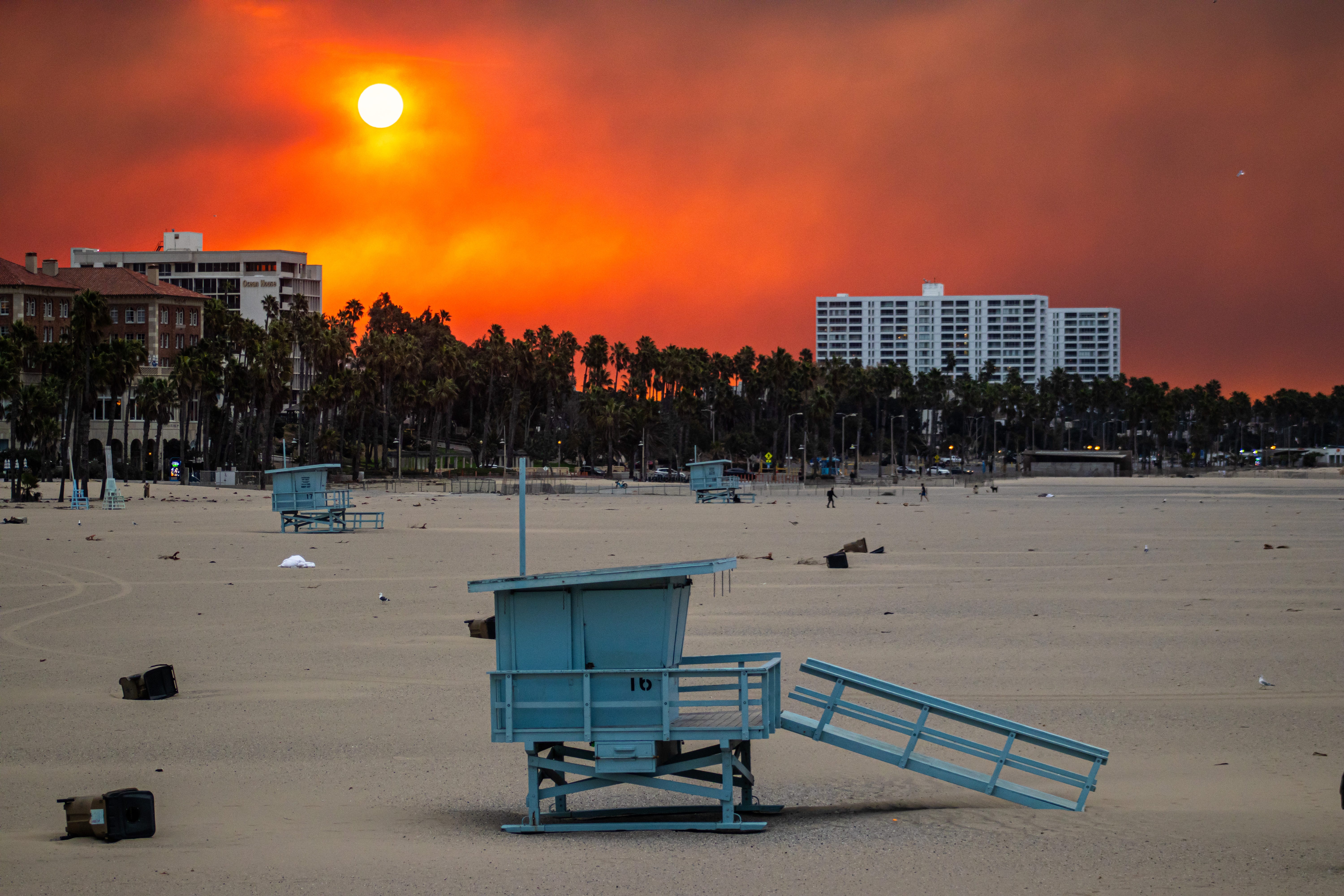
Today marks the one-year anniversary of the catastrophic wildfires that tore through Los Angeles, claiming 31 lives and causing an estimated $250 billion in damages.
As the damage came into focus that evening, I drafted the essay below to wrestle with the question: how does one actually stop catastrophic wildfire?
That night, my wife went into labor, my attention shifted to welcoming our daughter, and I never posted it. In the meantime, the discourse has become a hunt for an easy scapegoat: an empty reservoir, a prior fire left smoldering or a faulty electric line. Ignored have been the underlying conditions that set the stage like unmaintained vegetation, aging electrical equipment and inappropriately built homes for fire country.
So is there one thing we can do to prevent fires like these?
No. But we can build a systematic and layered defense. Here’s my essay from January 2025:
How to stop wildfire
Last week, catastrophic wildfires swept through Los Angeles. The city joined communities like Paradise, Lahaina, Santa Rosa and Boulder – and more across the world – that have been redefined by wildfire in the last decade. With the fires still burning, many people are grappling for answers.
During Santa Ana wind events, the volume of energy released by wildfire can rival that of nuclear weapons, and many times they simply cannot be stopped. There is no panacea – and no fire department, no matter how heroic, resourced or skilled, can stop all ignitions in these conditions. Instead, we must build and rely on a layered defense-in-depth strategy, built in advance.
The same concept is used in cybersecurity. Password protection alone can’t protect against hackers, so we use a layered defense of firewalls, VPNs, anti-virus software, email screening, security training and multi-factor authentication to harden targets against security threats. Taking wildfire seriously means constructing a similarly layered defense.
A comprehensive strategy would be hundreds of pages long and too difficult to implement. But there are five things within our control, which if done together will significantly reduce the negative effects of catastrophic wildfire:
Forest & fuel management
Stop utilities from starting high-risk fires
Improve detection & response times
Harden homes & communities
Reform our insurance markets
Forest & fuel management
Forests and grasslands in the Western United States have co-evolved with fire over millennia, with a historic fire regime characterized by high frequency and low severity. But starting in the early 20th century with the development of the timber industry, policies of “maximum suppression” were developed. Quickly eliminating wildfire starts became the priority. This disrupted the natural cycle of frequent and low severity fires, thereby increasing forest density. Western forests are now three times denser than they were a century ago. Furthermore, homes and towns built in wildland areas have eliminated our ability to let wildfires burn uncontrolled. By putting out small fires, we created megafires.
However, we can employ techniques such as logging, thinning and prescribed fire to reduce fuel loads. The scale of our current efforts here is laughable – hamstrung by regulation, permitting, NIMBYism, asymmetric risk and a lack of political will. As an example, California has 17 million acres that are at “very high” risk of fire, yet treated only 36,400 acres last year. Alongside regulatory reform and community support, technology can help: companies like BurnBot have made prescribed burning safer and more efficient. If we performed fuel treatment on the 10M most at-risk acres over the next 10 years at a cost of $2,000 per acre, it would cost us $20B or $2B per year. This would protect a very significant portion of the state on an ongoing basis, and would do so at a price that is less than half of what the LA wildfires will cost us.
Stop utilities from starting high-risk fires
In California, utility-caused wildfires account for 11% of fire ignitions but nearly 50% of damage. Utility ignitions are particularly dangerous because the same high winds that cause grid failures are the same conditions that lead to rapid fire growth.
The Camp Fire in 2018 was started when a 97-year-old “C-hook” on a PG&E transmission tower failed, sending sparks into dry grass and destroying the city of Paradise, killing 85 people. PG&E entered bankruptcy in 2019 as a result of liability from this fire.
These ignitions are addressable by improvements to our electrical infrastructure and operations. Utilities can employ several strategies to reduce ignitions:
Increase vegetation management programs along powerlines and use technology to make them more effective.
Make circuit breakers on powerlines more sensitive, and cut power to high-risk portions of the grid in advance of large wind events (known in the industry as EPSS and PSPS).
Increase investment in energy infrastructure:
Underground lines in high-risk areas
Modernize towers and lines
Install more sensitive breakers, and replace century-old equipment.
This will mean accepting higher electric bills as the cost of energy increases to reflect the risk in delivering it.
2026 note: Investing billions, PG&E has made tremendous progress in implementing these strategies in the last five years and ignitions are down significantly as a result. But work remains, both in their territory and even more so in other utility territories across the US.
Improve Detection & Response Times
In high wind, wildfire grows exponentially and every minute counts. A wildfire might be only two acres after 20 minutes, but can grow to 300 acres in another 20 minutes. Letting nature run its course is often our only choice once wildfires reach escape velocity; this moment is usually marked by an exasperated “she gone” on the radio. A recent study from the Moore Foundation confirmed that a 15-minute reduction in response time could reduce uncontainable wildfire and yield billions of dollars in economic benefit. This can be achieved through a combination of faster detection and response.
Faster detection using satellite and ground-based cameras is improving our response times, but current efforts need to be scaled. Companies like Pano AI alongside nonprofits like ALERTCalifornia and FireSat are helping detect fires earlier and improve situational awareness, but their coverage is limited. 20,000 additional camera stations across the American West paired with a dedicated satellite constellation would change the nature of wildfire response and cost $1B annually, a tiny fraction of the damages they could prevent.
If detected early, there’s a lot we can do to stop wildfires while they are small. Pre-positioning resources like aircraft, fire engines, and trained personnel in high-risk areas during peak fire seasons ensures immediate availability. Effective communication networks and tools like Watch Duty enable coordination between agencies. Tools like predictive modeling to anticipate fire behavior can further enhance response times.
The SoCal Quick Reaction Force (QRF) is an example of a successful public-private partnership that has saved lives, property, and taxpayer money by prepositioning large, night-capable aircraft for rapid response and using them liberally in the early stage of wildfire response. There is a tremendous opportunity to take these learnings and scale them globally using autonomous aircraft and drones in addition to traditional aircraft. Recent changes to drone regulations allowing Beyond Visual Line Of Sight (BVLOS) operations and improvements in overall capabilities make now the right time to do so.
2026 note: Convective announced its investment in Seneca, a company building autonomous fire suppression aircraft.
Harden Homes & Communities
The wildland-urban interface (WUI) is the geographic area where undeveloped wildland meets human development. In the last 30 years, the number of housing units there has increased by 46% – creating more vulnerabilities, but also more fuel and ignitions from human activity and power infrastructure.
The body of research on structure protection continues to grow, but it is clear that characteristics like defensible space, Class A roofing and dual pane windows are all effective in reducing structure ignition when paired with ongoing monitoring and maintenance. These efforts are even more important in the perimeter areas of communities where they interface with the wildland.
This research must be crystallized into ordinances and embraced and enforced by local communities. Software such as Fire Aside can help fire departments implement defensible space inspection programs and ensure their effectiveness in a collaborative way with residents.
2026 note: We are particularly excited about the promise of AI and how it could help design buildings that are both resilient and beautiful. In this vein, we recently announced our investment in Drafted AI.
Reform our Insurance Markets
Insurance acts as the economy’s shock absorber, allowing individuals, businesses, and governments to function and thrive in the face of uncertainty. Without it, the cost of risks would deter investment and development, leading to stagnation and credit and mortgage markets grind to a halt. It is an essential tool to manage and share catastrophe risk.
But regulatory policies have prevented insurance rates from reflecting actual risk, driving insurers out of the market and causing historic increases in the FAIR plan, California’s state-mandated insurance plan of last resort. Recent changes in California to allow insurers to incorporate the cost of reinsurance and to use forward-looking catastrophe models are a good first step, but more needs to be done.
There is a tremendous opportunity for insurance to create incentives for good behavior like home and community hardening. Non-smokers pay lower rates for health insurance – why shouldn’t homes that are hardened and well-maintained reap similar benefits?
Unfortunately, distorted market forces and regulated pricing prevents this from taking hold in homeowners insurance. Recent regulatory changes require insurers to offer discounts for home hardening, but these discounts total approximately 4% and predictably, homeowners have shrugged.
Companies like Stand and Delos are leading the charge on this new model of insurance in the non-admitted markets where pricing regulations are less prescriptive. (However, homeowners must be denied by three separate admitted insurers before they are permitted to purchase non-admitted policies.)
Underlying Forces: Climate change, policy, technology and workforce
Aside from specific strategies, there are underlying forces that can either work for us or against us in the fight against catastrophic wildfire. They include climate change, policy and regulation, technology, and our workforce.
A warming climate exacerbates fire behavior by creating longer, hotter, and drier fire seasons and increasing vapor pressure deficit – that is clear. Continued warming will make fires worse. It is unknown how much of recent catastrophes were due to climate change – certainly not none, but not 100% either.
Given the planetary timescale, uncertainty and politics of climate change, the more immediately addressable constraint is policy. Well-intentioned regulations – designed to protect consumers, the environment, or incumbents – have distorted market forces in ways that now actively impede risk reduction. When prices cannot reflect risk, capital does not flow to mitigation. When liability is asymmetric, behavior becomes defensive rather than preventive. When permitting takes years, fuel accumulates faster than we can remove it.
The good news? We have solved similar problems before. Structure-based urban firestorms destroyed parts of New York in 1835, Chicago in 1871 and San Francisco in 1906 - ultimately leading to building codes, sprinklers, hydrants and reimagined fire departments.
Wildfire demands a similar shift. Allowing utility rates to reflect true delivery risk would incentivize grid hardening, undergrounding, and advanced operational controls. Easing restrictions on sustainable forest management would encourage prescribed burns, mechanical thinning, and biomass utilization – reducing fuel loads while creating quality jobs in rural areas. Insurance reforms that reflect actual risk and reward mitigation, such as defensible space and fire-resistant construction, would align homeowner behavior with public safety. Unburdening the system does not mean deregulation – it means outcome-driven policy that unleashes innovation rather than constraining it.
With healthy markets in place, technology becomes a force multiplier. Real-time sensors and drones can detect faults on power lines before they spark ignitions. Smart grids can localize outages instead of shutting down entire regions. Better risk models can make insurance both fairer and more affordable. Fire-resistant materials and smarter home designs can become standard rather than exceptional. Technology does not replace people or policy – but it dramatically increases the leverage of both.
The final – and indispensable – pillar is the workforce. The men and women of the fire service are the backbone of any wildfire solution. Wildland firefighting is grueling, dangerous work: 24-hour shifts, extreme heat, heavy packs, steep terrain, and relentless smoke.
For this heroic job federal wildland firefighters are paid a whopping $15 per hour – a recent increase that is still wildly insufficient. Employment is often seasonal, forcing firefighters into off-season work and leaving us underprepared during what are now year-round fire conditions. If we expect a professional fire service capable of using advanced technology, conducting off-season fuel treatment, and responding at the speed modern fires demand, we must offer fair pay, year-round employment, and long-term career paths.
In Closing
The first step in addressing catastrophic wildfire is acknowledging that there is no single solution. This is a systems problem, and it requires a systems response.
The second is acknowledging that many of the necessary actions will be unpopular. No one wants higher electric bills, smoke from prescribed burns, landscaping restrictions, or higher upfront construction costs. But the alternative – repeated community-level catastrophe – is far more expensive in both moral and economic terms.
We should treat catastrophic wildfire the way we treat national defense or space exploration: as a solvable problem worthy of sustained investment, technological ambition, and coordinated execution. The future we should be building toward is one where forests are actively maintained rather than left to accumulate fuel; where ignitions are rare and rapidly detected; where communities are designed to withstand fire; and where suppression is fast, precise, and overwhelming when fires do start.
In that future, satellites and ground sensors detect ignitions within minutes. Aircraft, both crewed and autonomous, are pre-positioned and airborne quickly. Utilities operate hardened, intelligent, risk managed grids. Insurance rewards resilience. Firefighters are well-paid professionals equipped with the best tools available and not heroes of last resort placed in impossible situations.
If we seize this moment, catastrophic wildfire does not have to be a defining feature of the American West and a problem across the world. The technology exists. The capital is available. What remains is aligning policy, markets, and willpower to deploy these solutions at scale.
Bill is the founder of Convective Capital, a firm investing in resilience.
Thanks to Paul Graham, Brian Fennessy, Kat Mañalac, George Whitesides, Genny Biggs, Matt Weiner, Rich Aberman and Dr. Lori Moore-Merrell for reading drafts of this essay and providing feedback.
 | A guest post by
|
Hi Bill, this is an excellent breakdown of why we need a "layered defense" strategy rather than looking for a single silver bullet. Your point about Forest & fuel management is particularly critical, especially regarding how "asymmetric risk" and regulation hamper prescribed burns.
In that vein, I’d like to cite the work OpalAI is doing, which fits perfectly into this layer. They are developing FireGPT, a Vision Language Model (VLM) specifically designed to support controlled burn decision-making. By integrating NASA data to create quasi-real-time fuel maps, they are using "physics-informed AI" to reduce the very uncertainty and risk that often stalls these necessary fuel treatments.
Additionally, their FireVision platform focuses specifically on the Wildland-Urban Interface (WUI), providing the kind of granular data needed to effectively harden homes & communities and support the insurance reform you mentioned. It’s encouraging to see how these technologies can work in concert with the physical solutions like BurnBot and Pano AI that you highlighted. Great read!
Great piece Bill. Thanks for your thoughts.
I might add a critical element required to scale. Modernizing the governance and management infrastructure around forestry and land-use. Your $2K/acre treatment costs needs to also factor the indirect costs of infrastructure (roads, biomass facilities, equipment, etc), governance (research, demonstration, monitoring, environmental management systems, etc), and management infrastructure (eg best practices, design, data/modeling resources, etc), and human capital (training, development, workforce stabilization, etc). These are essential to scale, and much of it in western US has been built around an obsolete context for management friction (e.g., environmental advocates v. forest industry).
I'm working on a series of pieces on that break this down. Happy to share a preview draft if you want to contribute.